
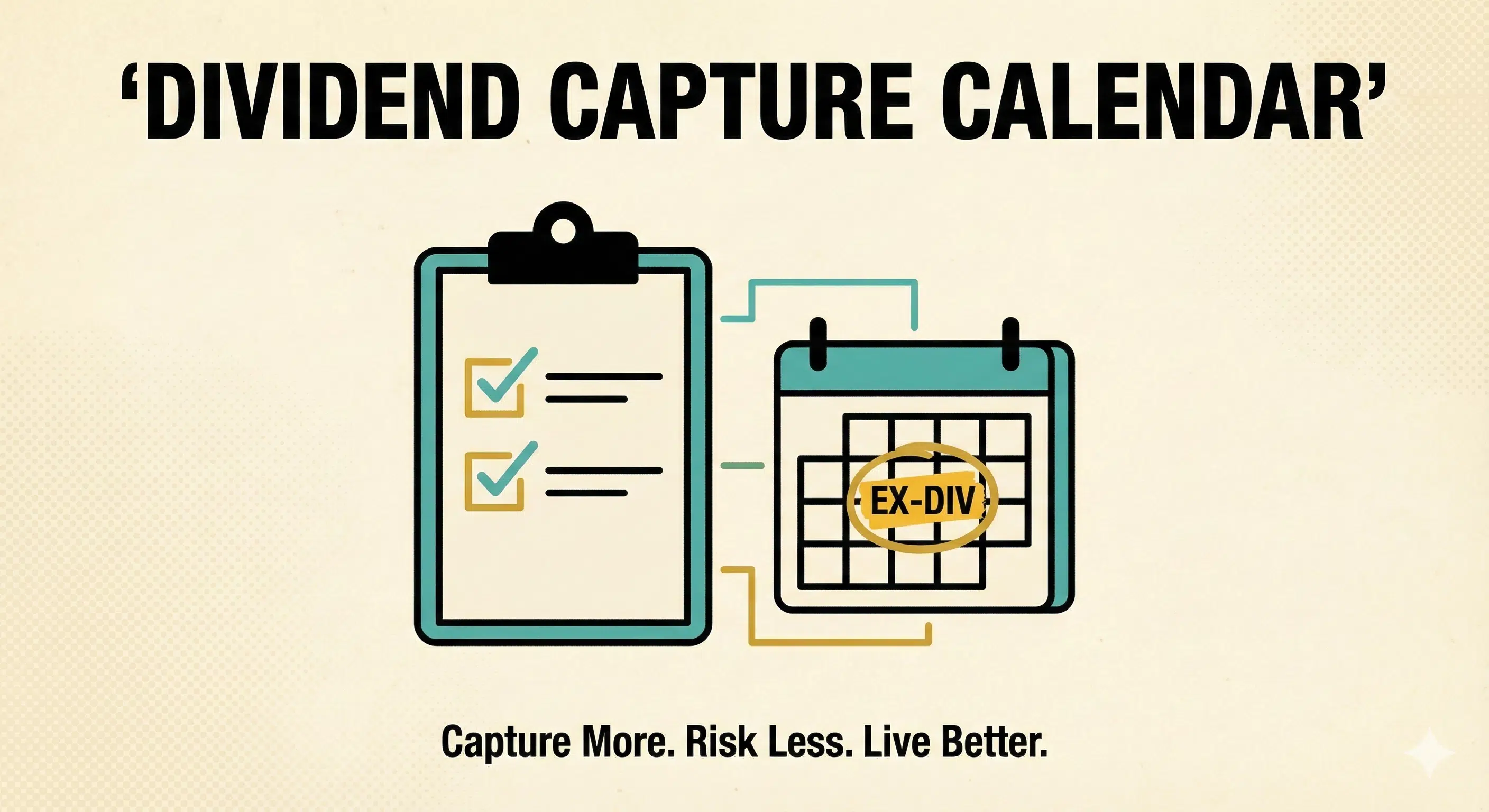
Quick answer: A dividend capture calendar is a simple system for tracking ex-dividend dates (plus nearby earnings/news) so you can plan entries and exits. The goal is to reduce surprises and keep your process repeatable.
Important: This is educational, not financial or tax advice. Dividend capture involves risk.
Want the “protect your butt” details? This post gives you the calendar system. The book gives you the guardrails: candidate filters, risk rules, and the “don’t do this” mistakes that quietly eat your dividend.
Why a dividend capture calendar matters (more than people think)
Dividend capture looks simple on paper: buy before the ex-dividend date, hold through it, then sell after.
In real life, the strategy usually fails for boring reasons:
- You forgot the ex-div date (yes, it happens)
- You didn’t notice earnings landing in the same window
- You entered too early, got chopped up, and lost patience
- You entered too late and paid the “panic tax” (spread + slippage)
A calendar turns dividend capture from “hope and vibes” into a repeatable workflow.
The only dates you need to track
You don’t need 19 different spreadsheets and a NASA launch schedule. Track these:
| Date | What it is | Why Yield Raiders care |
|---|---|---|
| Ex-dividend date | The cutoff date for who gets the dividend. | This is the “must own before” line. |
| Pay date | When cash is paid out. | Useful for cashflow planning (not for eligibility). |
| Earnings date (or estimate) | Quarterly results announcement window. | Earnings can nuke your tidy little dividend plan. |
| Entry window | Your planned buy window (example: 1–3 trading days before ex-div). | Prevents impulsive entries. |
| Exit window | Your planned sell window (example: 1–5 trading days after ex-div). | Keeps you from “bag-holding by accident.” |
A simple dividend capture schedule you can actually follow
Here’s a weekly rhythm that works for real humans with real brains:
Step 1 (weekly): Build a 2-week runway
Once a week (Sunday evening or Monday morning), look ahead two weeks. You’re not predicting the market — you’re just laying track.
- Pull upcoming ex-div dates for your watchlist
- Flag anything with earnings in the danger zone
- Pick your top 5–15 candidates (based on your rules)
Step 2 (daily): 5-minute “raider briefing”
Each trading day, spend 5 minutes:
- Check today’s ex-div list
- Confirm tomorrow’s ex-div list
- Look for “uh-oh” news (earnings moved, guidance, big downgrade)
Step 3 (trade day): Use a checklist before you click Buy
Dividend Capture Pre-Trade Checklist (fast):
- Ex-div date confirmed
- Earnings NOT inside your no-fly window
- Liquidity looks normal (spread not goofy)
- Entry plan exists (price level or “down day” rule)
- Exit plan exists (target window + risk stop)
How to avoid the #1 calendar killer: surprise earnings
Dividend capture hates surprise volatility. If your ex-div window overlaps earnings, you’re basically trading an earnings coin flip with a dividend costume on.
A simple rule many Yield Raiders use:
- No earnings inside the capture window (for example: X trading days before through Y trading days after ex-div)
Use whatever buffer matches your risk tolerance — the key is consistency.
Dividend capture calendar template (copy into your tracker)
| Ticker | Ex-Div | Pay Date | Earnings? | Entry Window | Exit Window | Notes |
|---|---|---|---|---|---|---|
| ABC | YYYY-MM-DD | YYYY-MM-DD | Yes/No | 1–3 days pre | 1–5 days post | Spread, trend, risk rules |
FAQ
Do I need to track the record date?
Not usually. For most retail workflows, tracking the ex-dividend date is what matters for eligibility.
Can I just use a dividend calendar website and skip the spreadsheet?
You can — but a spreadsheet (or tracker) is where you add the two things calendars don’t: your entry window and your exit plan.
How far ahead should I plan?
Two weeks is enough for most people: it creates structure without becoming a second job.
Next step
If you want the “calendar + rules” version (not just dates), the book covers the guardrails: candidate selection, risk controls, and the decisions that protect you when a trade doesn’t behave.
Related: What is dividend capture?
Related:

0 Comments